



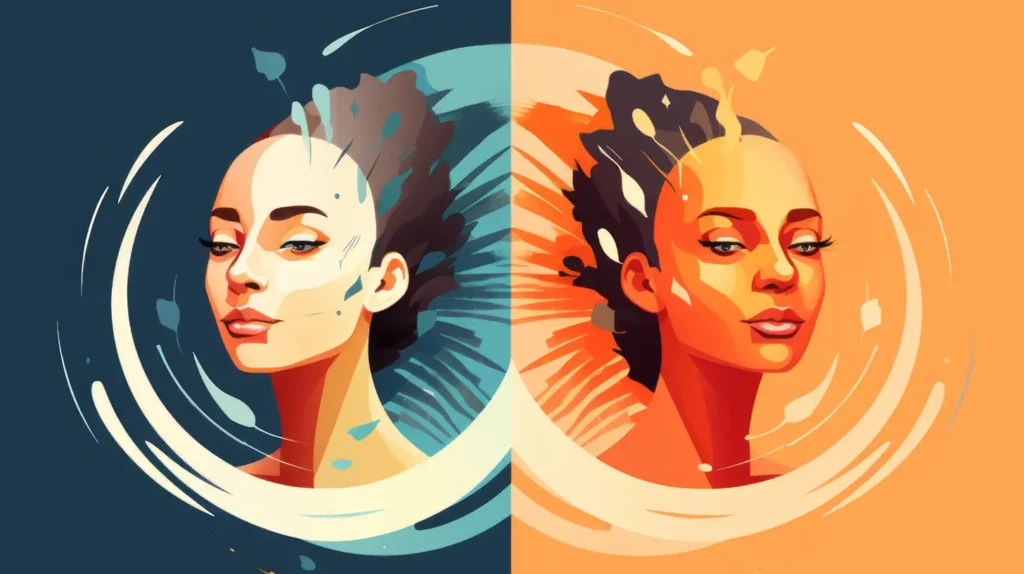
Imagine walking into a gallery where every painting adjusts its light, texture, and emotion based on the way you breathe. The artwork watches you back, studying your posture, your curiosity, your silent questions. Generative models behave like these enchanted canvases. They do not merely imitate reality. They listen to it, swallow it whole, and reinterpret it with a strange fidelity that hovers between truth and illusion. This tension between what is real and what only feels real forms the core of hyperrealism in machine creation. As the world embraces advanced learning systems, students and professionals exploring gen AI training in Hyderabad find themselves at the crossroads of art and algorithm, trying to decode this fine balance.
Hyperrealism, in this context, is not just an aesthetic feat. It is an emotional negotiation, a tug-of-war between human authenticity and synthetic precision.
The Mirror That Remembers
Generative models operate like ancient mirrors from folklore, the kind that never simply reflect. Instead, they remember every face, every movement, every whisper, and fold these memories into new reflections. A model trained on millions of high resolution images does not recreate a past it has seen. It constructs a new reality that feels familiar enough to trust but unfamiliar enough to question.
As creators and analysts work with these systems, many realise that the hyperrealistic outputs often reveal more about the training data than the object itself. A portrait generated by a model may show textures that no human captured, shadows that no camera recorded. This is the mirror’s memory at work. It gives us beauty, possibility, and sometimes unsettling distortions.
Professionals entering AI ecosystems, especially those taking up gen AI training in Hyderabad, increasingly confront the philosophical implications of these generated reflections. They learn not just the mathematics of hyperrealism but the ethics of seeing and showing.
When Algorithms Become Storytellers
Hyperrealism in generative models is more than technical prowess. It is narrative power. To understand this, imagine a storyteller who has read every novel ever written. When asked to craft a new tale, this storyteller does not copy plots. Instead, they weave threads from thousands of voices into something hauntingly fresh.
Generative systems function the same way. They learn the rhythm of textures, the pulse of light, the breath of landscapes. When they produce a hyperrealistic scene, they are not merely replicating pixels. They are interpreting patterns, instincts, and statistical whispers from the past.
The illusion of authenticity emerges because these models understand the language of detail. A ripple in water. The micro tension in human skin. The imperfect bend of a handwritten letter. These tiny imperfections make a synthetic image feel alive. The boundary between real and artificial blurs not because the system imitates flawlessly, but because it imitates imperfectly in the most human way possible.
The Ethical Canvas: When Realism Misleads
Hyperrealism carries an immense responsibility. When artificial creations mimic truth with unsettling accuracy, the ethical terrain shifts. A synthetic voice can comfort a stranger. A fabricated face can mislead an entire network. A manipulated environment can distort public memory.
In this world, every hyperrealistic creation becomes a brushstroke on a shared ethical canvas. Who decides what is authentic enough to be trusted? Who safeguards the line between creative liberty and deception? When a generative model paints a face that never existed, are we admiring an invention or witnessing the birth of a new identity?
These questions matter not only to technologists but to society at large. Hyperrealism is a gift when it enhances creativity but a threat when it masquerades as truth. The need for transparency, explainability, and oversight becomes central to the practice of modern AI ethics.
The Dance Between Human Intent and Machine Interpretation
The most magical aspect of hyperrealistic generative models is the conversation between creator and machine. The human provides intention. The machine responds with interpretation. Together they choreograph an artwork that neither could produce alone.
This dance reveals one critical insight. Machines do not understand reality. They understand data. It is the human who infuses meaning into the final output. The curve of a smile, the softness of dawn light, the tension in storm clouds, all gain emotional weight only when interpreted by human experience.
Hyperrealism highlights this intersection beautifully. The machine captures granular detail, but the human recognises the soul in that detail. The blend creates a unique artistic space, one where authenticity is not a measure of truth but a measure of resonance.
Conclusion
Hyperrealism in generative models is not a trick of advanced algorithms. It is a collaboration between human imagination and computational precision. These systems do not aim to deceive. They aim to learn, reinterpret, and create with a fidelity that unsettles and amazes in equal measure.
As the line between authentic and artificial things, the responsibility shifts to creators, educators, and policy makers. The world must approach hyperrealistic machine output with curiosity and caution, embracing its creative potential while respecting its ethical boundaries. Those investing in deeper understanding, including learners undergoing gen AI training in Hyderabad, are shaping this future with every experiment, every model, and every mindful application.
Hyperrealism is not the end of originality. It is the beginning of a new artistic dialogue where humans and machines co create, question, and redefine what it means to represent reality.